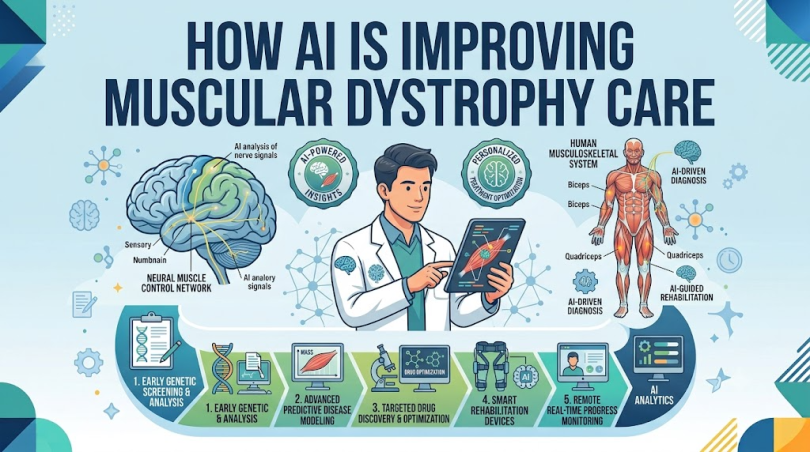

Advancing Muscular Dystrophy Diagnosis With AI
Understanding Muscular Dystrophy Through AI and Genetics
Muscular dystrophy is a group of genetic conditions that cause muscles to weaken over time. It’s pretty complex because there are many different types, like Duchenne and Becker, each caused by unique genetic changes. Figuring out exactly which type someone has, and how severe it might be, has always been a challenge. Doctors usually rely on symptoms, genetic tests, and sometimes muscle biopsies. But even with all that, it’s not always clear how a disease will progress. This is where AI is starting to make a real difference.
Improving Patient Classification With Machine Learning
AI, especially machine learning, is helping doctors sort patients into more specific groups. Think of it like this: instead of just saying ‘muscular dystrophy,’ we can get much more detailed. Researchers are feeding huge amounts of genetic data into AI systems. These systems can then spot patterns that humans might miss. This helps create clearer categories for patients, which is a big step forward.
- Data Collection: Genetic information is gathered from many patients.
- Pattern Recognition: AI algorithms analyze this data to find genetic markers linked to different disease types and severities.
- Patient Grouping: Based on these patterns, patients are placed into more precise categories.
The Impact of Precise Muscular Dystrophy Classification
Getting the classification right is a game-changer. Currently, many patients don’t fit neatly into existing categories, making it tricky to choose the best treatment. With AI’s help, doctors can get a clearer picture. This means treatments can be more tailored to an individual’s specific genetic makeup and disease progression. It’s not just about better treatment plans; it’s about potentially slowing down the disease and improving a person’s quality of life. While finding the best neurologist in Las Vegas is important for any medical condition, AI is helping to refine the very foundation of how we understand and approach these complex genetic disorders. It’s a move towards truly personalized care.
The ability of AI to sift through vast genetic datasets and identify subtle patterns is revolutionizing how we diagnose and categorize muscular dystrophy. This precision is key to developing more effective, individualized treatment strategies.
AI-Powered Therapeutic Development For Muscular Dystrophy
Leveraging AI for High-Dimensional Analysis of Muscular Dystrophy Data
Developing new treatments for conditions like muscular dystrophy is tough. It’s not just about finding one magic bullet. These diseases are complex, with many cellular processes going wrong. Traditionally, researchers would look at one or two factors at a time, which is like trying to understand a whole city by only looking at one street. AI changes that. It can sift through massive amounts of data – think genetic information, protein interactions, cell behavior – all at once. This high-dimensional analysis enables us to spot patterns and connections that were previously hidden. This allows us to see the bigger picture of how the disease works.
AI’s Role in Aggregating and Synthesizing Research Data
There’s a ton of research out there on muscular dystrophy, but it’s scattered across countless papers, databases, and studies. It’s a real challenge for scientists to keep up and connect the dots. AI can act like a super-powered librarian and researcher rolled into one. It can gather information from all these different sources, organize it, and find links between studies that might seem unrelated. This synthesis of existing knowledge helps accelerate discovery, preventing researchers from reinventing the wheel.
Here’s how AI helps pull it all together:
- Data Collection: AI tools can scan and extract relevant data from scientific literature, clinical trial results, and genetic databases.
- Pattern Recognition: Algorithms identify recurring themes, potential drug targets, or disease mechanisms across diverse datasets.
- Knowledge Synthesis: AI can build a more complete map of the disease by connecting fragmented pieces of information.
The sheer volume of biological data generated today is overwhelming. AI is becoming indispensable for making sense of it all, turning raw data into actionable insights to develop new therapies.
Identifying Therapeutic Targets With AI Platforms
Once AI has crunched all that data, it can point us toward the most promising areas for new treatments. Instead of guessing, AI platforms can predict which genes, proteins, or biological pathways are most likely involved in the progression of muscular dystrophy and, therefore, are good drug targets. This is a much more efficient way to find potential therapies. It helps researchers focus their efforts on the most promising avenues, saving time and resources.
Some of the ways AI helps pinpoint targets include:
- Predicting Drug Efficacy: AI can model how potential drugs might interact with specific targets in the body.
- Identifying Novel Pathways: AI can uncover previously unknown biological routes that contribute to the disease.
- Prioritizing Targets: Based on the data, AI can rank potential targets by their likelihood of success in clinical trials.
The Role of Stem Cells and AI in Muscular Dystrophy Research
Human Stem Cells for Disease-Specific Muscular Dystrophy Insights
Muscular dystrophies, like Duchenne muscular dystrophy (DMD), are tough to study because they affect muscles directly. For a long time, we’ve relied on animal models, but they don’t always perfectly mirror what happens in humans. That’s where human stem cells, especially induced pluripotent stem cells (iPSCs), are changing the game. We can take a patient’s cells, reprogram them back into a stem cell state, and then grow them into specific muscle cells. This gives us a way to see the disease in action, right in a dish, using cells that are genetically identical to the patient. It’s like having a personalized disease model.
These stem cell models let us look at things like how muscle cells develop and function differently in someone with muscular dystrophy. For instance, studies have used patient-derived iPSCs to spot problems in how cells mature, which points to new areas where we might be able to intervene with treatments. We can also see specific issues, like how heart muscle cells in DMD patients might have shorter telomeres, which are like protective caps on our chromosomes. This ability to create patient-specific cellular models is a huge step forward for understanding the unique ways muscular dystrophy affects individuals.
AI-Driven Drug Screening With Stem Cell Models
Once we have these stem cell models, the next big challenge is finding drugs that can help. Testing potential treatments one by one is slow and expensive. This is where AI really shines. AI can sift through massive amounts of data from drug screens much faster than humans ever could. Imagine having thousands of compounds to test; AI can help prioritize which ones are most likely to work.
Here’s a simplified look at how it works:
- Cell Culture: Grow muscle cells derived from patient iPSCs in lab dishes.
- Drug Application: Expose these cells to various potential drug compounds.
- Data Collection: Measure how the cells respond – are they healthier, do they function better, or are there any toxic effects?
- AI Analysis: Machine learning algorithms analyze the vast amounts of data collected from these tests to identify patterns and predict which drugs are most effective.
This approach allows researchers to screen a huge number of potential therapies quickly. It’s not just about finding a single drug; AI can help identify compounds that might work together or target different aspects of the disease. For example, some research has looked at how certain traditional herbal medicines affect DMD iPSC-derived heart cells, showing that their antioxidant properties can reduce stress. AI can help analyze these kinds of results on a much larger scale.
Combining Multi-Omics Data for Muscular Dystrophy Understanding
Muscular dystrophy is complex, and it’s not just one thing going wrong. It involves changes at many levels – our genes, the proteins they make, and how cells interact. This is where “multi-omics” comes in. It’s about looking at all these different layers of biological information together.
Think of it like trying to understand a car problem. You wouldn’t just look at the engine; you’d also check the fuel system, the electrical wiring, and maybe even the tires. Multi-omics does the same for muscular dystrophy, gathering data from:
- Genomics: Studying the DNA and genetic mutations.
- Transcriptomics: Looking at which genes are turned on or off.
- Proteomics: Analyzing the proteins produced by the cells.
- Metabolomics: Examining the small molecules involved in cell processes.
AI is absolutely vital for making sense of all this data. It can find connections between these different ‘omics’ layers that wouldn’t be obvious otherwise. For instance, AI might spot a pattern where a specific genetic change leads to a particular protein issue, which then affects how cells communicate. By combining stem cell models with AI analysis of multi-omics data, researchers can get a much clearer picture of the disease’s inner workings. This holistic view helps identify not just the main problems but also the subtle interactions that contribute to muscle weakness and degeneration, paving the way for more targeted and effective treatments.
Enhancing Muscular Dystrophy Care Through Precision Medicine
The Power of Precision Medicine in Neuromuscular Disorders
Muscular dystrophies are a tricky bunch of genetic conditions. They mess with your muscles, making them weaker over time. This can really change how someone lives their life, affecting everything from walking to just getting through the day. For a long time, doctors have relied on looking at symptoms and doing genetic tests to figure out what’s going on. But now, things are getting more specific. We’re starting to use AI alongside genetic information to get a much clearer picture of each person’s condition. This means we can sort patients into more defined groups, which is a big step towards better care.
Tailoring Treatments for Muscular Dystrophy Patients
It’s becoming clear that a one-size-fits-all approach just doesn’t cut it for muscular dystrophy. Every person’s condition is a bit different, even if they have the same type of dystrophy. This is where precision medicine comes in. By looking at a person’s unique genetic makeup and how their specific type of dystrophy is progressing, doctors can start to pick treatments that are more likely to work for them. AI is helping us sort through all the complex genetic data to find these patterns.
- Identifying specific genetic markers that influence disease severity.
- Predicting how a patient might respond to different types of therapies.
- Adjusting treatment plans based on ongoing monitoring and new data.
The goal is to move away from general treatments and towards highly personalized care plans. This means using all the information we have about a patient to make the best possible decisions for their health.
Regenerating Healthy Tissues for Muscular Dystrophy Patients
Beyond just managing symptoms, there’s a lot of exciting work happening in trying to actually fix the damage caused by muscular dystrophy. Researchers are exploring ways to regenerate healthy muscle tissue. This involves looking at things like stem cells, which have the potential to develop into different cell types, including muscle cells. AI is playing a role here too, by helping to screen potential drugs and therapies much faster than before. The idea is to find ways to not only stop the muscle from breaking down further but also to rebuild what’s been lost.
| Approach | Description | Potential Benefit |
| Stem Cell Therapies | Using stem cells to replace damaged muscle cells or support muscle repair. | Restoring muscle function and strength. |
| Gene Therapy | Correcting the underlying genetic defect that causes the dystrophy. | Preventing further muscle degeneration. |
| AI-Driven Drug Discovery | Using AI to find new drugs that can help muscle repair or regeneration. | Speeding up the development of effective treatments. |
The future of muscular dystrophy care increasingly centers on understanding each individual’s unique situation and using that knowledge to guide treatment and research.
Conclusion
Artificial intelligence is really changing how we handle muscular dystrophy. It’s helping doctors figure out who has it faster and more accurately, which is a big deal. Plus, AI is accelerating the search for new medicines and ways to repair damaged muscles. By combining AI with other cool sciences like stem cells and analyzing lots of different data, we’re getting closer to treatments that are just right for each person. This means better lives for people with muscular dystrophy, with more hope for the future.
Frequently Asked Questions
What exactly is muscular dystrophy?
Muscular dystrophy is a group of diseases that cause your muscles to weaken over time. It’s caused by changes in your genes that affect how your muscles work. There are different kinds, and they can affect people in different ways.
How is AI helping doctors diagnose muscular dystrophy?
AI can analyze a lot of patient information, such as genetic data, much faster than humans. It helps doctors identify patterns that might be hard to see, leading to quicker, more accurate diagnoses. This means patients can start getting the right help sooner.
Can AI help find new medicines for muscular dystrophy?
Yes! AI can sift through vast amounts of research and data to identify potential drug targets or existing drugs that might work. It helps speed up the long process of discovering and testing new treatments.
What are stem cells, and how do they relate to muscular dystrophy research?
Stem cells are special cells that can turn into different types of body cells. Scientists use them to create models of muscular dystrophy in the lab. This lets them study the disease closely and test treatments without using people.
What is ‘precision medicine’ for muscular dystrophy?
Precision medicine means creating treatments tailored to each person. Since muscular dystrophy can affect people differently, AI helps doctors understand individual needs to select the best treatment plan for each person.
Will AI completely replace doctors in treating muscular dystrophy?
No, AI is a tool to help doctors. It can do amazing things with data, but doctors still provide the human touch, make final decisions, and care for patients. AI makes doctors even better at their jobs.