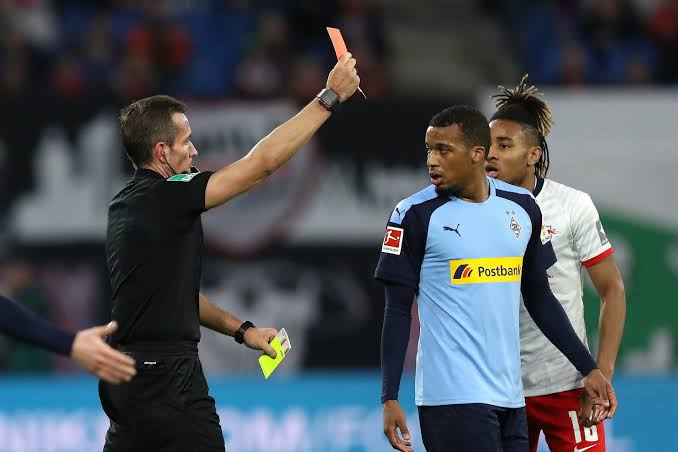

Teams battling relegation in the 2017/2018 Bundesliga tended to adopt cautious structures and high-tension defensive football, and that combination had a clear impact on goal totals and bookings. While each club approached survival in its own way, common patterns emerged that both suppressed scoring and increased the likelihood of cards under pressure.
Why Relegation Battles Tend Toward Tight, Card-Heavy Games
The league’s structure—in which the bottom two sides go down automatically and 16th faces a play-off—creates intense pressure around the lower end of the table. By the late stages of 2017/2018, clubs near the drop knew that a single goal could swing both their own fate and that of direct rivals, making risk management the priority. The natural tactical response was to compress space, defend deeper, and sacrifice attacking ambition for stability.
That change in priorities tends to pull expected goal counts downward but raises the emotional temperature. When a team defends close to its box for long spells, more last-ditch tackles and cynical fouls emerge, and referees often respond with yellow cards to maintain control. This cause–effect chain—survival pressure → defensive conservatism → low-scoring trajectories but more booking incidents—is why relegation fixtures often look like strong candidates for unders paired with elevated card potential, especially when stakes are highest late in the season.
Identifying Typical Survival Styles Among 2017/2018 Strugglers
Looking at the 2017/2018 table, the relegation battle involved teams clustered toward the bottom three places and the 16th-spot play-off position. Within that group, styles fell broadly into two categories. Some clubs leaned into deep blocks and slow tempo, aiming to keep matches within one goal either way. Others tried to press selectively or counter with pace, but usually from a structurally conservative base.
In both cases, the attacking ceiling remained relatively low compared with the league’s more expansive sides. The difference was where and how they defended: deep-block teams stayed compact around their box and invited pressure, while slightly more proactive strugglers pressed in midfield but still avoided committing large numbers forward. For bettors, those differences matter because they shape whether a match is more likely to drift into a cagey 0–0/1–0 or open up into a scrappier, transitional contest with more room for late goals.
Comparing Low-Block and Mid-Block Survival Approaches
Two broad defensive archetypes dominated the relegation zone: the low block and the compact mid-block. Both aimed to limit space and high-quality chances, but they did so at different field heights, producing distinct patterns in shot profiles and card distribution.
How Each Style Influences Goals and Bookings
Low-block survival teams sat deep, prioritizing numbers in and around the penalty area and accepting territorial disadvantage. This often led to opponents taking more shots from distance or crossing heavily, which keeps the scoreline manageable but forces defenders into repeated interventions near goal. That environment naturally increases the chance of fouls in dangerous zones and tactical pulls or trips when attackers break the line, raising yellow-card risk even if total goals remain low.
Compact mid-block strugglers tried to contest more of the game in central areas, using tight spacing between lines to disrupt build-up and trigger counters once they won the ball. These sides still avoided over-committing full-backs and midfielders forward, so their matches rarely turned into end-to-end shootouts. However, because more duels happened in midfield and in transitions, cards often arose from stopping breakaways or repeated small fouls to prevent opponents attacking the exposed back line.
A Simple Style–Outcome Comparison Table
To crystallize the connection between survival styles, low scores, and cards, it helps to lay out the main characteristics side by side:
| Relegation Style Type | Goal Impact | Card Impact |
| Deep low block | Suppresses chance quality; favors 0–0, 1–0 scorelines | More last-ditch tackles and box-area fouls; steady yellows |
| Compact mid-block counter | Keeps totals moderate; goals often from turnovers | Frequent tactical fouls in midfield and in transitions |
Interpreted from a betting perspective, neither style typically drives big scorelines in relegation match-ups, but both create fertile ground for bookings. Low blocks tend toward fewer but more intense defensive actions near goal, while mid-block counters generate a broader spread of small fouls across the pitch. In both cases, the battle for survival pushes players toward riskier challenges in marginal situations, supporting the logic behind low-goal and high-card expectations.
How Late-Season Context Tightens Scores and Raises Tension
Timing within the season magnifies these tendencies. In the final third of 2017/2018, relegation-threatened sides faced opponents with equally high stakes, meaning that even one conceded goal became a major psychological and mathematical blow. Rather than chasing big wins, survival teams often tried to avoid catastrophic losses, especially in six-pointers against direct rivals.
This context tends to compress risk. Managers are less likely to gamble with attacking substitutions if a draw still has value, and players become more conservative with forward runs, reinforcing the low-scoring bias. At the same time, every 50–50 ball takes on extra importance, and accumulation of niggling fouls grows as teams look to disrupt rhythm. Referees, aware of the stakes and rising emotions, are more inclined to use yellow cards to prevent escalation, which keeps disciplinary stats elevated even when net goals remain limited.
Using a Betting Platform to Operationalize Style Insights
Translating these stylistic ideas into actual positions means aligning them with specific goal and card markets on offer. Under situational conditions where you have identified a classic relegation six-pointer between defensive sides, the next step is not simply to back “under” by default but to compare your expectations to the lines and prices your bookmaker lists. Many experienced bettors prefer to run this process through a single primary account during a season, because consistently seeing the same layout for totals and cards reduces friction and mistakes. In that context, some used the menu structure of a given betting platform to quickly map style-based reads—low tempo, compact blocks, and high emotional stakes—onto specific markets such as under 2.5 goals or team card totals, periodically checking whether the odds on ufabet or comparable operators had moved enough relative to their model to justify placing a stake or leaving the match alone.
When Relegation Matches Break the Low-Score Pattern
Not every survival match stays tight. When a relegation-threatened team falls behind early, especially at home, its tactical discipline can dissolve under pressure to equalize, creating a more open game with extra transitions and higher total xG from both sides. Managers might introduce extra forwards, sacrifice a holding midfielder, or push full-backs higher, all of which increase the chance of later goals, including on the counter.
From a pre-match analysis standpoint, this is the main failure mode of a blanket “unders plus cards” view. Matches where the underdog is structurally fragile or where both relegation rivals are forced to win rather than simply avoid defeat have far more pathways to late scoring swings and potentially even wide scorelines. Bettors need to account for these alternative scripts by assessing not only baseline style but also what each manager is likely to do when chasing, and how quickly they abandon the initial low-risk plan.
Avoiding Overlap With Other Gambling Activity in Card and Total Markets
Card and total bets on relegation clashes are often treated as “side markets,” but their volatility and correlation with emotionally charged game states make them closer to primary risk exposures. In modern multi-product environments, where the same account may host parlays, other leagues, and non-sports games, it is easy to treat a few under/over and booking bets on survival fixtures as casual additions. That can blur the connection between your tactical reasoning and your actual risk.
A more structured approach treats these markets as integral components of your Bundesliga strategy and keeps them ring-fenced from unrelated stakes. Even when a casino online website or broader gambling hub makes it straightforward to jump between football markets and other products, keeping separate budgets or clear internal rules for relegation-focused totals and card bets ensures that decisions remain grounded in tactical analysis rather than in a general desire for action. This separation makes it easier to evaluate, at season’s end, whether your reads on survival styles genuinely translated into an edge on goals and cards.
Summary
Comparing the styles of relegation-fighting teams in the 2017/2018 Bundesliga helps explain why so many survival fixtures tilted toward low-scoring but card-heavy contests. Deep blocks and compact mid-blocks both prioritized defensive stability, limiting chance volume while simultaneously increasing the frequency and intensity of fouls under pressure. For bettors, the key is to treat these stylistic patterns as probabilistic guides rather than guarantees, filtering each match by team approach, seasonal context, and likely in-game adjustments before deciding whether under-goal lines or card totals are genuinely mispriced.