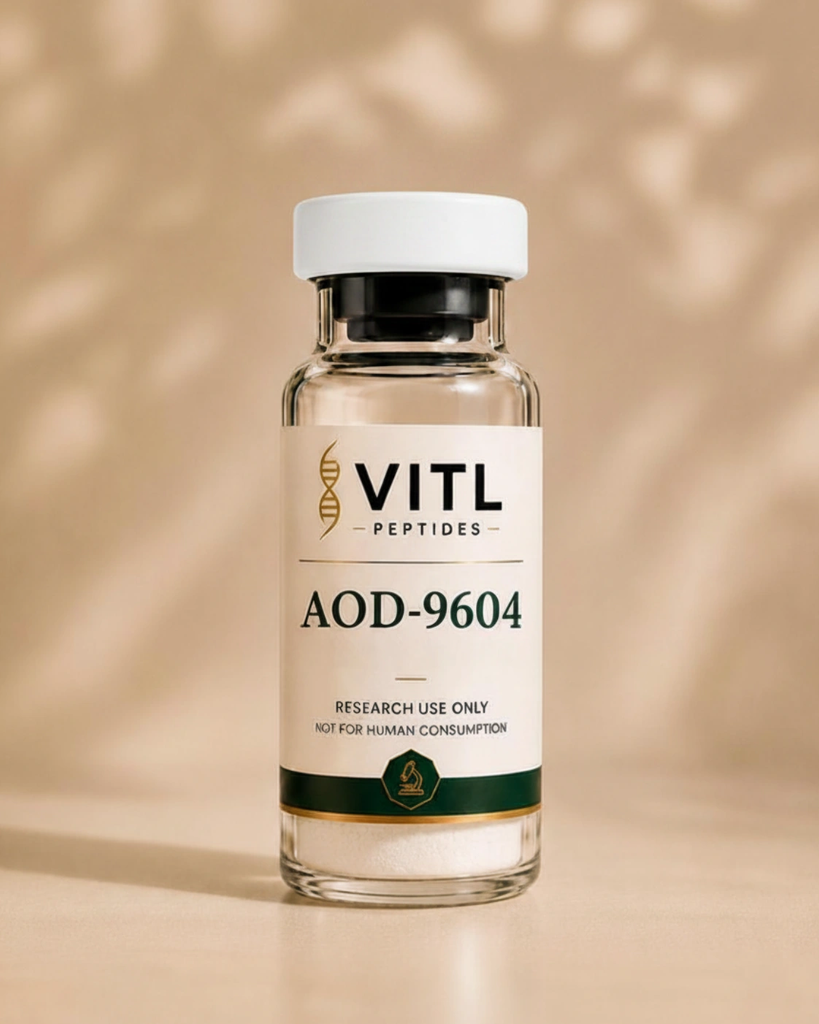
Peptide research continues to expand scientific understanding of how specific amino acid sequences interact with biological systems. Among the areas attracting attention is the study of growth hormone fragments, which allow researchers to investigate selected portions of larger hormone structures rather than examining complete proteins alone. These fragments provide opportunities to explore molecular characteristics, peptide composition, and specific biochemical interactions.
AOD-9604 is one example of a synthetic peptide analogue associated with the C-terminal region of human growth hormone. Interest in the AOD-9604 research peptide reflects broader scientific curiosity about how shorter peptide sequences differ structurally and functionally from their parent molecules.
What Are Growth Hormone Fragments?
Growth hormone fragments are shorter peptide sequences derived from specific regions of the human growth hormone molecule. Full-length human growth hormone contains 191 amino acids, arranged in a complex structure that supports its biological activity. Researchers study selected fragments to investigate whether individual regions have distinct molecular properties.
Understanding Peptide Fragmentation
Peptide fragmentation involves studying shorter amino acid sequences associated with larger proteins or hormones. Scientists can examine these sequences to understand their structural characteristics and investigate how particular regions contribute to molecular interactions.
In laboratory research, fragments may be synthesised to reproduce selected portions of a naturally occurring protein. This allows researchers to investigate individual peptide sequences under controlled conditions.
Important considerations include:
- The number and arrangement of amino acids.
- The chemical properties of individual residues.
- The presence of structural bonds.
- Differences between native and modified sequences.
- The analytical methods used to confirm peptide identity.
Studying these characteristics helps establish a clearer understanding of peptide structure. It also explains why an AOD-9604 research peptide should be identified by its specific sequence rather than simply described as interchangeable with full-length growth hormone.
Why Researchers Study Hormone Fragments
Hormone fragments provide a more focused way to investigate selected molecular regions. Instead of studying every structural component of a complete hormone, researchers can examine shorter sequences and assess their individual characteristics.
This approach is useful when investigating molecular binding, structural stability, and biochemical interactions. Researchers may compare a fragment with its parent molecule to understand which structural features are retained or modified.
However, the presence of a particular amino acid sequence does not automatically establish that a fragment reproduces the biological activity of the complete hormone. Each research question requires appropriate experimental evidence and clearly defined methods.
AOD-9604: An Example of a Growth Hormone-Related Peptide
AOD-9604 is a synthetic peptide analogue associated with the C-terminal region of human growth hormone. It contains 16 amino acids and includes an additional N-terminal tyrosine modification. This structural distinction is important when comparing it with other growth hormone-related peptide sequences.
Understanding Its Molecular Structure
The molecular structure of AOD-9604 is based on a selected region of human growth hormone, specifically residues 177–191, with an additional tyrosine at the N-terminal end. Its sequence is commonly represented as YLRIVQCRSVEGSCGF.
Two cysteine residues form an intramolecular disulfide bond, contributing to the peptide’s cyclic structural arrangement. This feature is relevant when studying its molecular conformation and chemical characteristics.
When evaluating an AOD-9604 research peptide, researchers should consider:
- Its documented amino acid sequence.
- The presence of the additional tyrosine residue.
- Its cyclic structure and disulfide bond.
- Molecular identity and purity specifications.
- Batch-specific analytical documentation.
These details help distinguish AOD-9604 from other related peptide fragments. Accurate identification is particularly important when interpreting published research.
Its Connection to Peptide Research
AOD-9604 has attracted scientific attention because researchers have investigated its relationship with metabolic pathways and the molecular characteristics of growth hormone fragments.
Early investigations examined whether selected regions of growth hormone could be studied separately from the complete hormone structure. This research helped establish interest in synthetic peptide analogues and their potential relevance to specialised biochemical investigations.
The AOD-9604 research peptide is therefore an example of how peptide modification can create a distinct research material. Its experimental history should be evaluated independently rather than assuming that findings involving full-length growth hormone apply to the fragment.
Research Areas Involving Growth Hormone Fragments
The investigation of growth hormone fragments involves several scientific disciplines, including peptide chemistry, molecular biology, and biochemical analysis. Understanding these areas helps explain why researchers continue to examine smaller hormone-derived sequences.
Molecular Structure and Biochemical Interactions
Molecular structure is central to peptide research because amino acid arrangements influence the physical and chemical characteristics of a sequence. Even a relatively small modification can change molecular properties.
Researchers may investigate how peptide sequences interact with selected biological components under controlled laboratory conditions. These studies can involve examining molecular conformation, stability, and specific biochemical responses.
For an AOD-9604 research peptide, structural investigations may focus on its modified sequence and cyclic arrangement. Such work helps researchers distinguish its molecular identity from that of full-length growth hormone.
Analytical Methods Used in Peptide Research
Analytical testing helps establish whether a peptide sample matches its intended chemical specifications. Different methods provide different types of information, making a combination of analytical approaches useful when appropriate.
Common techniques include:
- High-performance liquid chromatography (HPLC) for assessing sample composition and purity.
- Mass spectrometry for examining molecular mass and supporting identity assessment.
- Peptide mapping for investigating sequence-related characteristics.
- Stability testing for evaluating changes under defined storage conditions.
The selection of analytical methods depends on the research objective and the characteristics of the material. Results should be interpreted alongside the relevant testing procedures and documentation.
Evaluating Research-Use Peptides
Selecting a peptide for laboratory investigation requires attention to product identity, documentation, and handling requirements. Product descriptions alone may not provide enough information to evaluate a research material properly.
Reviewing Product Specifications
Researchers should examine whether product information includes the sequence, molecular characteristics, reported purity, and available analytical records.
Before selecting an AOD-9604 research peptide, consider reviewing:
- A batch-specific Certificate of Analysis (COA).
- Reported purity and analytical testing methods.
- Peptide sequence and molecular identity.
- Storage and handling information.
- Clear research-use-only classification.
These checks support more informed laboratory material selection. Researchers should also ensure that documentation corresponds to the specific batch being evaluated.
Choosing a Research-Focused Supplier
A research-focused supplier should make relevant product information accessible and communicate material specifications clearly. Transparent documentation helps researchers assess whether a compound is appropriate for their intended laboratory investigation.
Vitl Peptides provides product information for research-focused peptide materials, including AOD-9604. Researchers exploring an AOD-9604 research peptide can review the available specifications and supporting documentation before making an assessment.
Research materials should always be handled according to applicable laboratory safety procedures and supplier instructions. They should not be treated as approved medicines or used for human or veterinary purposes.
Conclusion
Growth hormone fragments offer an important area of investigation within modern peptide science. By examining selected amino acid sequences, researchers can explore molecular structure, chemical characteristics, and biochemical interactions in greater detail.
AOD-9604 illustrates this approach through its modified 16-amino-acid structure and connection to the C-terminal region of human growth hormone. Understanding its sequence, structural differences, and research background is essential when evaluating an AOD-9604 research peptide.
Vitl Peptides provides research-focused product information to support the evaluation of peptide materials. Careful attention to molecular identity, analytical documentation, and appropriate research-use requirements remains essential for responsible laboratory investigation.