
Walk into most gyms, and the loudest room is still the one running high-intensity circuits: fast transitions, jump squats, a trainer yelling over music.
It works for people whose joints can tolerate it and whose schedules can absorb the recovery time it demands.
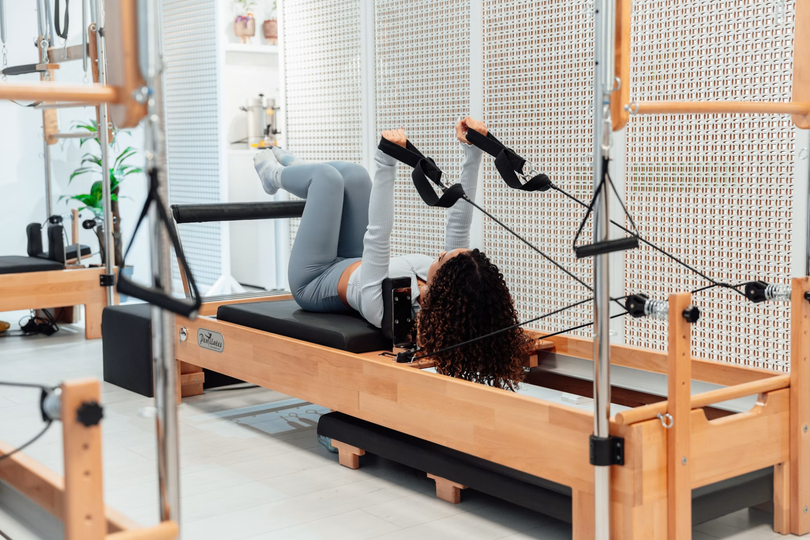
A quieter shift has been happening alongside it. More people are gravitating toward slow, spring-resisted training, the format built around machines like the Megaformer, where movements are deliberately controlled rather than explosive.
It looks less dramatic on the outside. The results, according to a growing body of exercise science, are anything but modest.
What Actually Makes This Format Different
The core mechanic is time under tension. Instead of a quick rep followed by a brief rest, a spring-loaded platform keeps muscles working continuously, resisting the movement on the way out and again on the way back.
There’s no true rest phase within a set, which is a very different demand on the body than a traditional weight circuit built around short bursts and pauses.
That continuous resistance is also why sessions on this kind of equipment tend to run shorter than a typical circuit workout while still feeling comparably demanding.
Forty to forty-five minutes is common, largely because there’s very little downtime built into the format to begin with.
Comparing the Formats
| Slow Resistance Training (Megaformer-style) | Traditional Weight Circuit | HIIT | |
| Joint impact | Low – controlled, supported movement | Moderate – depends on exercises selected | Higher – jumping, explosive movement common |
| Muscle engagement | Continuous, full-body most sets | Targeted, one muscle group at a time | Full-body, but intermittent |
| Typical session length | 40–45 minutes | 45–60 minutes | 20–30 minutes |
| Learning curve | Moderate – technique matters early on | Low to moderate | Low |
| Recovery demand | Moderate | Moderate to high, load-dependent | High |
| Best suited for | Sustainable, joint-conscious long-term training | Building raw strength with heavier external load | Time-limited cardio-focused sessions |
None of these formats is objectively superior across the board. What the table does show is that slow resistance training occupies a specific, useful niche: intensity without the joint cost of high-impact work, and a level of full-body engagement that a targeted weight circuit doesn’t typically offer in a single set.
The Science Behind Working Slower
Skeptics of slower training styles often assume “controlled” means “easy.” The physiology says otherwise. Removing momentum from a movement forces the working muscle to generate and control force through the entire range, rather than relying on speed to carry it through the harder portion of a rep.
That sustained effort matters for what happens after the workout ends, too.
Excess post-exercise oxygen consumption, or EPOC, describes the elevated calorie burn your body sustains while recovering from a demanding session.
According to the American Council on Exercise’s breakdown of EPOC, heavier training loads and shorter recovery intervals both increase this effect, exactly the conditions that continuous, spring-resisted work creates by design.
The joint-friendly side of the equation is just as well established. Cleveland Clinic’s guidance on low-impact training points out that low-impact workouts can deliver real cardiovascular and strength gains without the repetitive pounding that high-impact formats place on the knees, hips, and lower back, a distinction that matters more the longer someone plans to keep training consistently.
There’s a secondary effect worth mentioning too: stabilizer muscle recruitment.
Fast, momentum-driven movements tend to let the body’s larger, more powerful muscle groups do most of the work, while smaller stabilizing muscles around the hips, shoulders, and spine stay relatively passive.
Slowing a movement down and removing momentum forces those stabilizers to engage throughout, which is part of why people often notice improved balance and joint stability after a few months of consistent training, not just visible strength changes.
Who Tends to Get the Most Out of It
This style shows up most often among people who’ve already tried high-impact training and hit a wall, not from lack of effort, but from joints that simply couldn’t absorb another year of it. It also draws people returning to exercise after time off, since the controlled, supported nature of the movement makes it easier to build confidence without the risk that comes with explosive, high-speed exercises.
Plenty of committed athletes use it too, often as a way to maintain strength and conditioning during a season without adding the impact load their sport already demands.
It’s also become a common recommendation for people balancing a demanding schedule, since the efficiency of continuous, full-body engagement means a shorter session can still deliver a genuinely complete workout, rather than needing separate days for upper body, lower body, and cardio.
For anyone considering bringing this style of training home, searching for a Lagree machine for sale online often leads to more compact alternatives such as The Core Collab’s Sculptformer. The key details to compare are the spring range, carriage stability, and whether the machine can continue to challenge you as your strength improves, regardless of which brand or model you choose.
Those are the same details worth checking regardless of which brand or model ends up being the right fit.
FAQ
Is slow resistance training actually as effective as high-intensity cardio?
It can be, and the intensity of effort matters more than the speed of the movement. The mechanism looks different, but continuous muscular tension with almost no rest can push the heart rate up and trigger EPOC in ways that genuinely hold up against a typical interval session.
Do I need prior Pilates or strength training experience to start?
Not really. If anything, moving slower gives beginners the chance to actually learn proper form instead of just trying to keep up with the pace. Most people feel noticeably more comfortable with the machine by their third or fourth session, once the basic movement patterns start to click.
How often can this type of training be done each week?
More often than most high-impact formats allow, mainly because there’s so little joint stress to recover from between sessions. 3 to 5 sessions a week is fairly common among regular practitioners, though the right number still depends on individual recovery, sleep, and whatever other training gets layered on top of it.